
What Is a Disposable Camera + Should You Get One?
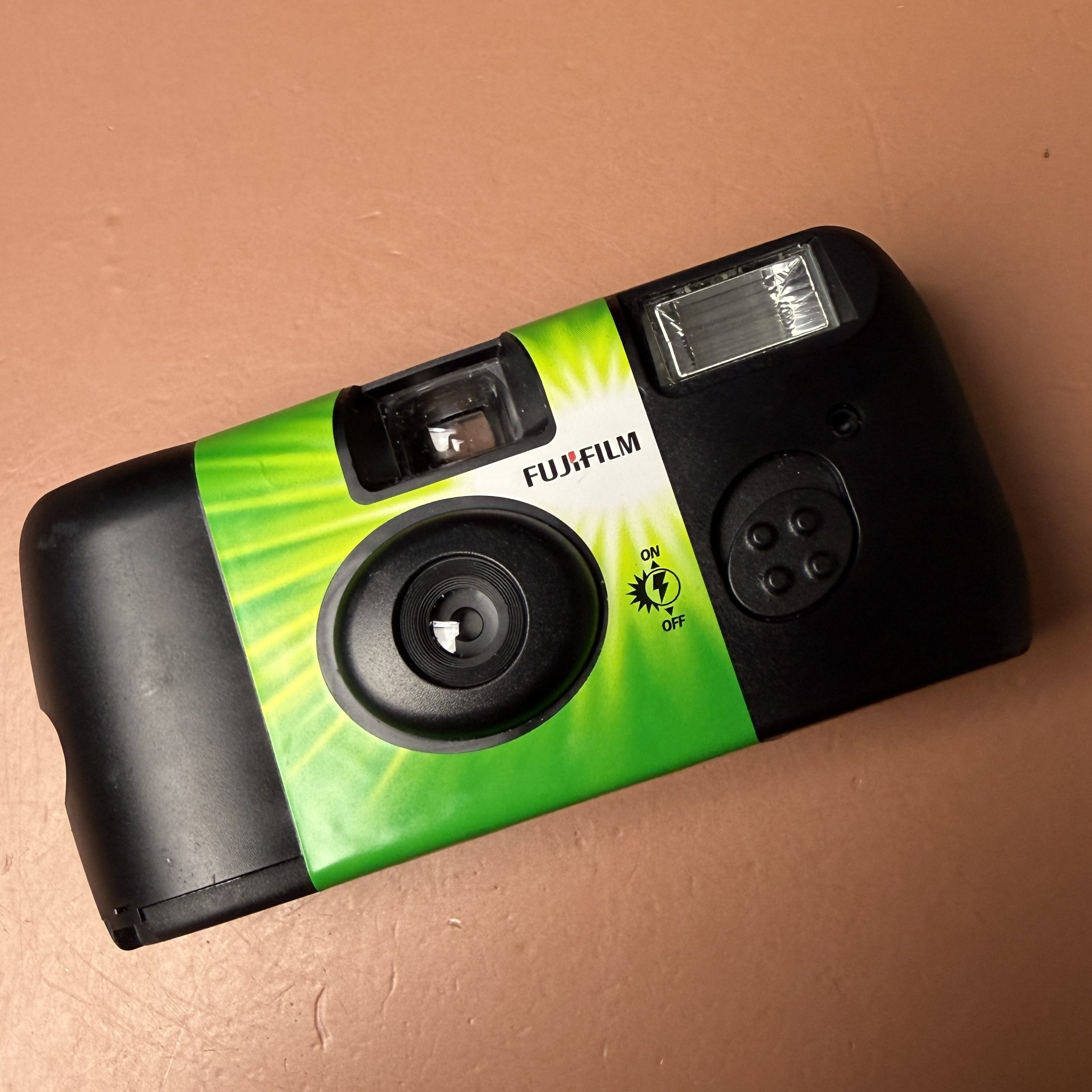
So, what is a disposable camera?
They are probably the first thing people think of when they hear film photography… yet most don’t actually know how they work, why they still exist, or whether they’re worth buying today.
The short answer?
A disposable camera is a single-use film camera designed to be as simple as possible.
No settings.
No screens.
No learning curve.
But there’s more to it than that.
Hi! I’m Teddy. I’ve tested over 4,000 film cameras through my eBay shop (Analog Adventure) and YouTube channel…. and I see disposable cameras showing up everywhere.
From weddings and vacations to school projects and anyone looking to get started with film.
No… film is not dead, and yes, a disposable camera is still relevant today.
Before you decide if one makes sense for you, let’s break it down.
What Is a Disposable Camera?
It is a preloaded film camera meant to be used once and then sent to a lab for processing.
After all the pictures are taken:
- The entire camera is sent to the lab
- The film is removed and developed (Get $10 off here)
- The plastic shell is recycled or reused by manufacturers
Most disposable cameras include:
- Fixed-focus lens
- Fixed shutter speed
- Fixed aperture
- Manual film advance wheel
- Built-in flash
No menus.
No modes.
No decisions.
You simply point, shoot, wind, and repeat.
How Disposable Cameras Work
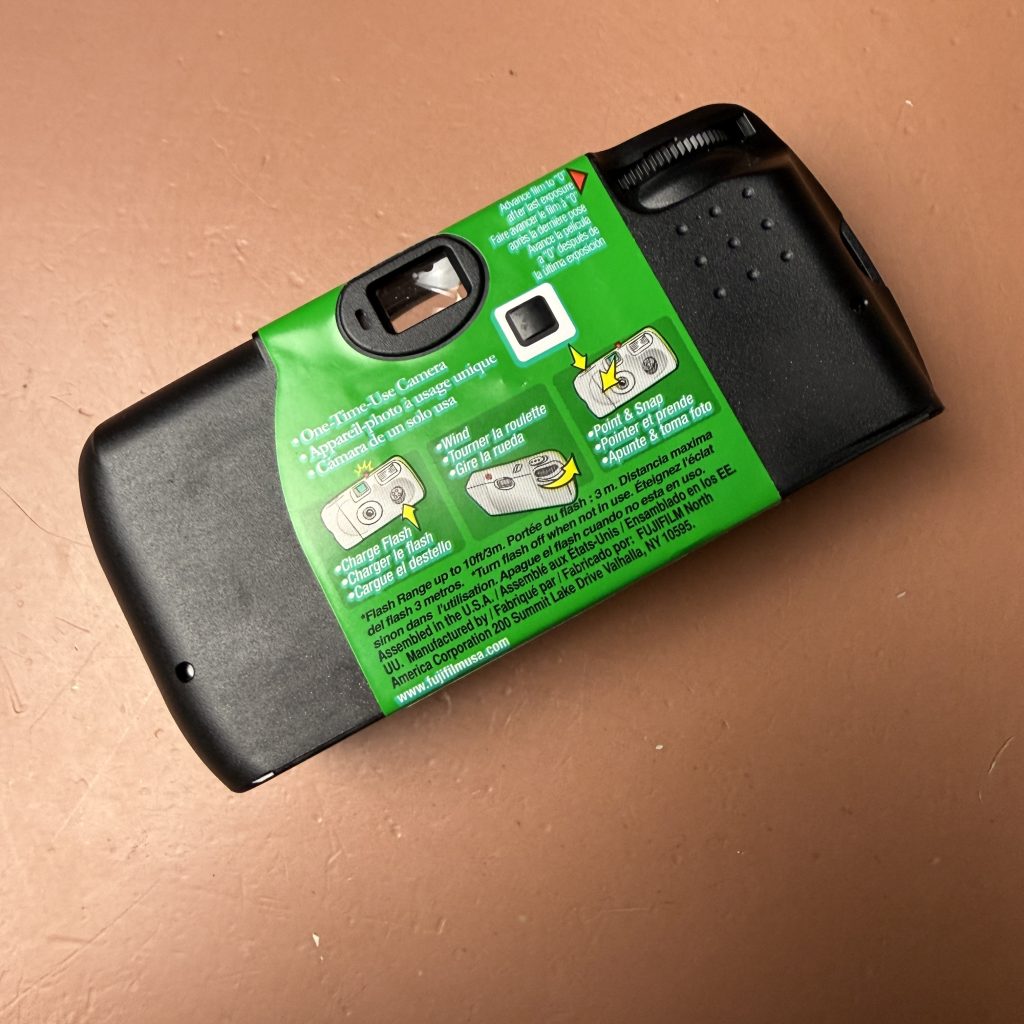
They are intentionally simple.
Here’s what’s happening inside:
- The lens is fixed-focus (everything beyond a few feet is “in focus”)
- Exposure is pre-set for average daylight
- Advance film manually after each shot
- Flash (if included) charges with a button
- Film is standard 35mm
Once you hit the exposure limit (usually 24 or 27 shots), the camera is finished.
There’s nothing to reset, because it was never meant to be reused.
Do Disposable Cameras Need a Battery?
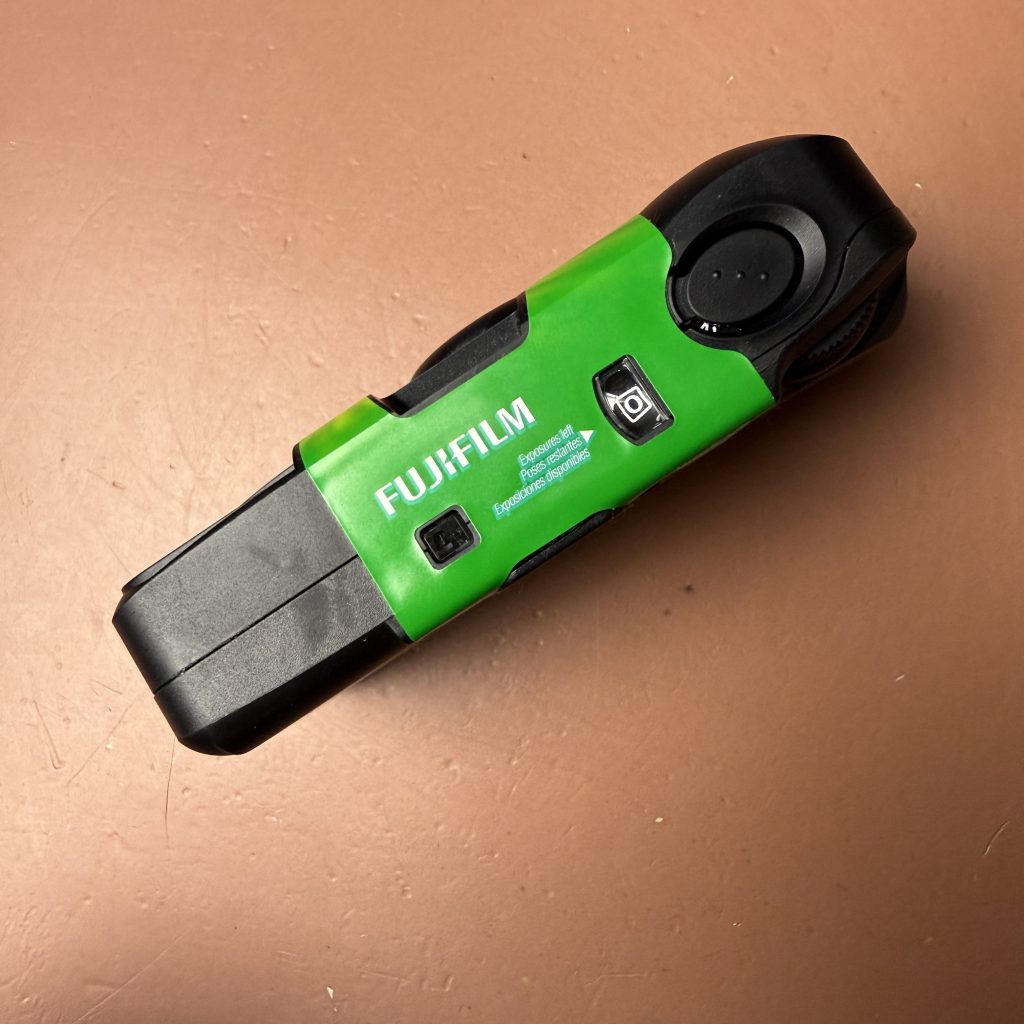
Disposable cameras do NOT require a replaceable battery.
Most disposable cameras are:
- Fully mechanical
- Spring-powered
- Battery-free for normal shooting
If it includes a flash, the power source is built-in from the factory and not meant to be replaced.
What this means for you:
- No battery shopping
- No dead-camera surprises
- No compatibility issues
- No electronics to fail over time
If the film advances, the camera works.
Buying a Disposable Camera
They are easy to find even today:
- Drugstores
- Big-box retailers
- Online shops
- Amazon
- Camera stores
Popular types include:
What to look for when buying:
- Expiration date (fresh film matters)
- Flash option if shooting indoors
- ISO rating (ISO 400 is safest)
- Waterproof casing for beach or pool use
Once finished, you’ll send the camera to a film lab for development and scanning. (Get $10 off here)
“But What Do Disposable Camera Pictures Look Like?”
The pictures have a very specific look.
Expect images that are:
- Soft
- High contrast
- Slightly unpredictable
- Nostalgic
- Imperfect in a good way
You’ll often see:
- Strong on-camera flash
- Uneven exposure
- Motion blur
- Vignetting
They don’t look digital.
They don’t look polished.
They look real.
That’s why people keep using disposable cameras.
Pros and Cons of Disposable Cameras
Pros
- Extremely easy to use
- No battery required
- Lightweight and durable
- Zero learning curve
- Great for events and travel
Cons
- Limited number of shots
- Per-photo cost is higher
- No control over settings
- One-time use only
Best For:
Parties, weddings, vacations, kids, beginners, casual shooters.
Disposable Cameras vs Reusable Film Cameras
Disposable cameras are ideal when:
- You want simplicity above all else
- You’re shooting a one-time event
- You don’t want to risk expensive gear
- You don’t plan to shoot film regularly
Reusable film cameras are better when:
- You want long-term value
- You plan to shoot multiple rolls
- You want sharper images
- You enjoy learning photography basics
Many film photographers start with disposable cameras… then move on once they’re hooked.
Who Are Disposable Cameras Best For?
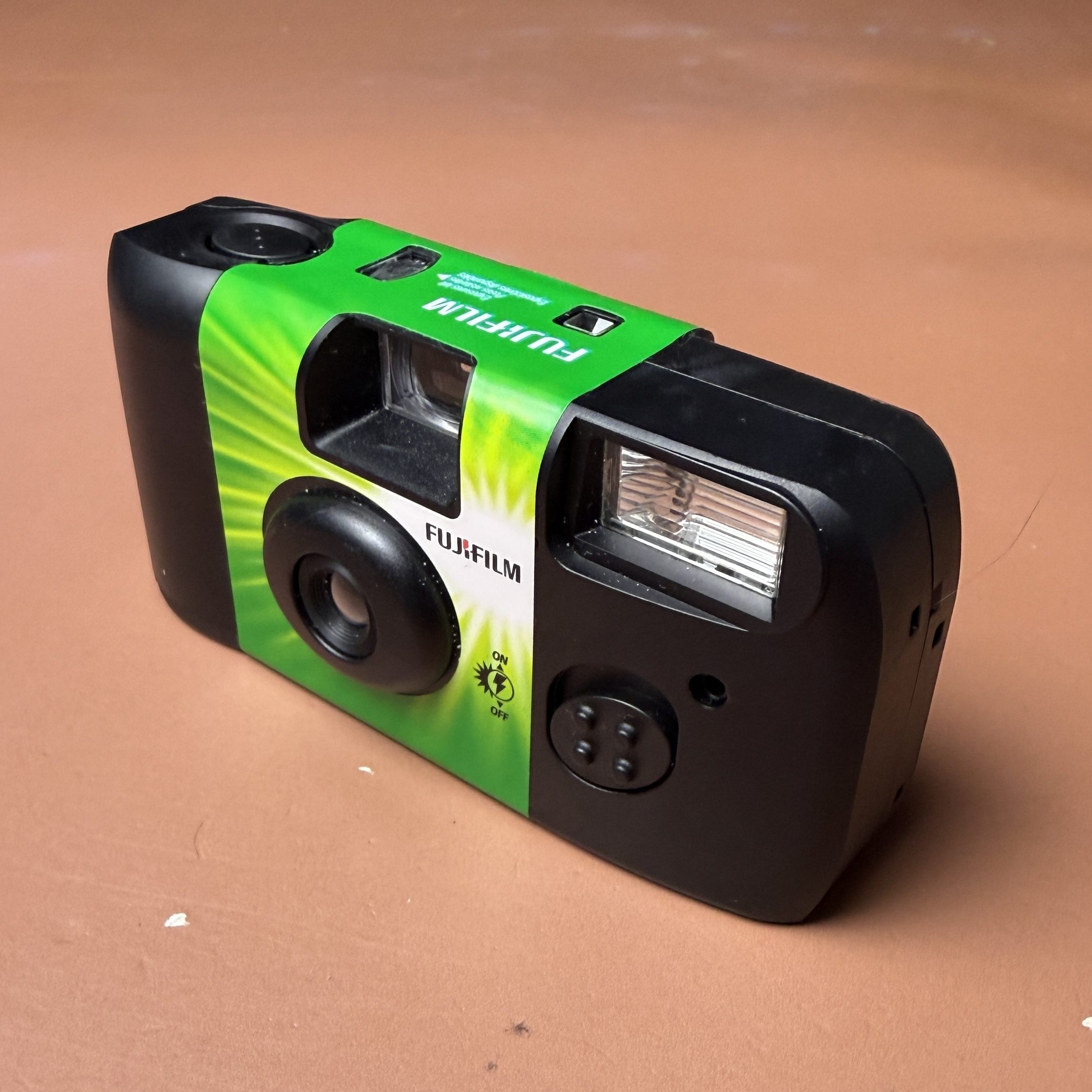
They are perfect if you:
- Want to try film photography with zero commitment
- Are documenting a special event
- Want stress-free shooting
- Prefer experience over technical quality
They’re not about perfection.
They’re about trying something new.
